
Mobile Hospital Robot
Autonomous vitals and rounds, right at the bedside.
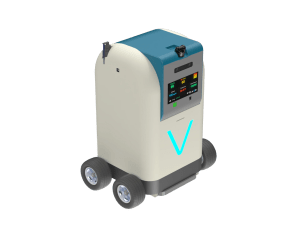
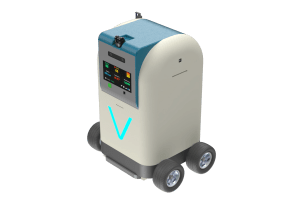
Mobile V-DOC moves through wards and corridors on its own, captures key vitals quickly, and helps your staff stay updated through your hospital workflow.
1. Guided vitals checks and quick patient inputs, without tying up nurses.
2. Built for real hospital navigation with stereo cameras, LiDAR and IMU.
3. Designed for large, high-demand facilities and busy floors.
Medical Features
Four integrated checks built into a single robot body. The stationary model keeps all core vitals and medication dispensing, while sample collection is reserved for the mobile unit. Patients are guided step-by-step with clear on-screen prompts.
Body Temperature
Touch‑free infrared thermometer mounted on the robot.
Patient simply holds it near the forehead for a few seconds.
Result is captured on‑screen and saved with the visit.
Blood Pressure
Built‑in BP cuff is ready at the side of the robot.
Patient slips the cuff onto the upper arm and taps Start.
V‑DOC records systolic, diastolic and pulse in one go.
SpO₂ & Heart Rate
Finger slot on the front acts as a simple pulse‑oximeter.
Patient places one finger inside and stays still briefly.
Oxygen level and heart rate are shown clearly and stored with the rest of the vitals.
BMI (Height & Weight)
Low‑profile scale in the base measures weight while the patient stands.
A slim height sensor extends to measure height automatically.
V‑DOC calculates BMI instantly and adds it to the visit summary.



Navigation
Mobile V-DOC is built to move safely in real hospital conditions like changing lighting, moving people, and tight corridors.
1. Sees depth: Stereo cameras help it understand what is ahead and avoid obstacles.
2. Sees around it: 2D LiDAR supports 360-degree obstacle awareness.
3. Stays oriented: IMU helps it track movement and position reliably.
Built for the hospital ecosystem
Mobile V-DOC fits into the hospital journey from triage to wards. It reduces bottlenecks, supports nurses during peak load, and keeps vitals connected to your workflow and systems.
Key components in a hospital deployment
Mobile V-DOC
Fully autonomous version with navigation hardware. Roams wards, delivers medicines and samples, and monitors patients continuously, complementing the stationary robot in high-demand hospitals.
HIS / EMR
Hospital information system where V-DOC sends vitals, test results, and intake data. Reduces duplicate entry and makes sure clinicians see up-to-date information when the patient arrives.
Nurses & Clinicians
Frontline staff focus on exceptions and complex care, while V-DOC handles repeatable vitals checks, basic triage support, and routine administrative steps like history capture.
Charging Dock
A dock for automatic charging. During setup, the robot is guided around the floor once to learn routes, safe zones, and key destinations in order to navigate the Hospital effectively.
Interaction Flows
1) Intake & triage flow
1. Patient is guided for a quick check.
2. Vitals are captured in minutes with clear prompts.
3. Staff see results early and can prioritize faster.
2) Monitoring & nurse support
1. Robot supports scheduled rounds for checkups.
2. Readings stay consistent and easier to track.
3. Staff get alerted when something needs attention.
3) Operations and workflow support
1. Cuts time spent on repetitive steps.
2. Keeps patient updates organized across the day.
3. Helps flow during peak hours..