Medical Features
1. Body Temperature
- A non-contact infrared thermometer is mounted on a flexible arm.
- It releases via a push-latch on the robot’s face.
- The arm is positioned near the forehead for a quick, accurate reading.

2. Blood Pressure
- An internal BP monitor dispenses its inflatable cuff from a side slot.
- The cuff is wrapped around the upper arm; the user taps Start on the screen.
- The cuff inflates automatically and records systolic/diastolic pressure and pulse.

3. SpO2 and Pulse
- A front-facing finger port houses the pulse-oximeter sensor.
- The user inserts a finger and holds still while measurements are taken.
- The patient holds their finger steady while the robot carries out the measurements.

4. Lung Capacity
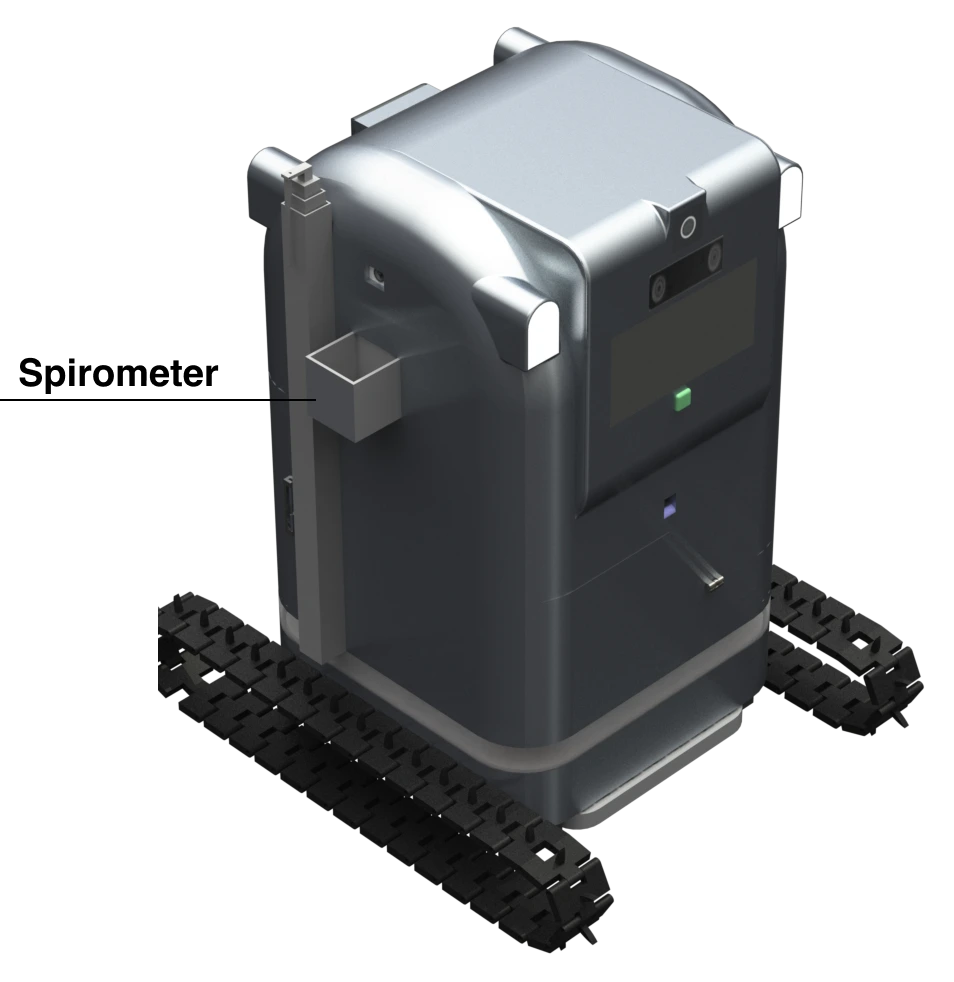
- A side drawer opens to present the spirometer.
- The robot dispenses a sterile, disposable turbine and mouthpiece.
- A short instruction video plays; the user performs the guided breathing steps.
5. BMI
- The robot deploys a floor scale; the user stands still for a few seconds.
- The patient will be instructed to stand still on the weighing scale for a few seconds.
- A telescopic rod with a precise ultrasonic sensor placed on the head of the rod is used to measure the patient’s height.
- Once the height and weight are recorded, the BMI is calculated depending on the patient’s sex and age.

6. Blood and Urine Samples
- The robot collects blood and urine samples using specialized, sterile collection devices that are dispensed from the robot at the required time.
- For blood samples, it uses a disposable, painless and automated phlebotomy system which is carried out on the patient’s arm and ensures a hygienic process to acquire the blood. (Similar to the Tasso Kit).
- Sterile urine specimen containers are dispensed to the patient. They are instructed to store their urine in the containers according to standard hospital procedures.
- Once collected, these specimens are stored in insulated compartments within the robot ensuring they remain at optimal conditions for preservation. These insulated compartments are designed to maintain the integrity of the samples until the robot reaches the smart base for transferring it to the testing facilities.


The Ecosystem
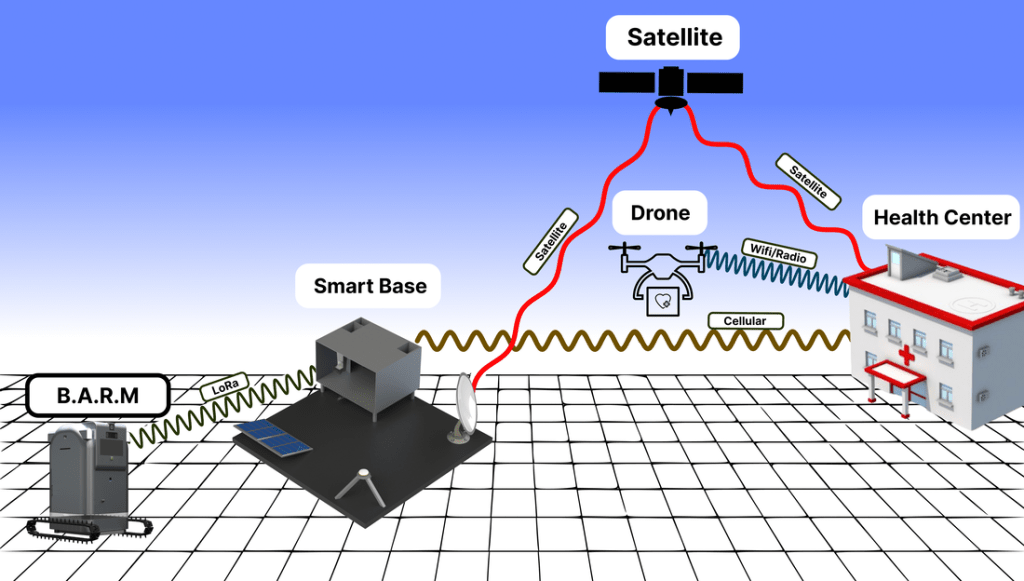
To amplify the robot’s capabilities, it operates inside a connected Four-part ecosystem: Mobile robot, Smart Base (hub with refrigerated storage, charging, RTK, solar), Health Center (tests, houses drone), and Transfer Drone moving specimens/meds between base and center.
Key components
Transfer Drone — Moves specimens and medications between the Health Center and the Smart Base.
Mobile Outdoor Robot — Autonomous medical robot that performs on-site checkups and health workflows across outdoor/urban campuses and communities.
Smart Base — Refrigerated specimen storage, charging station, RTK base, solar power; central hub for handoffs with the drone.
Health Center — Nearest facility able to run blood/urine tests; drone is based here.
What all interactions take place?
There are three main interactions within the ecosystem:
1. Transfer of Specimen
2. Transfer of Medication
3. Communication System
1) Specimen transfer
1. The Health Center runs tests and sends results to qualified professionals for diagnosis along with any flags the robot recorded (e.g., high BP, high temperature).
2. After collecting specimens (see Medical Features on this page), the robot notifies the Smart Base to request a drone pickup.
3. The robot travels to the Smart Base and places specimens into the refrigerated unit.
4. The drone picks up and flies specimens to the Health Center.
2. Medication transfer
1. After diagnosis, the Health Center dispatches medications to the Smart Base via drone.
2. The Smart Base stores meds until the robot arrives to collect them.
3.The robot dispenses medication on schedule to the patient.
4. On return, the drone carries back medical waste (disposables, packaging) to the Health Center for responsible disposal.
3. Communication
1. The Smart Base coordinates communications with the Health Center.
2. If available, it uses cellular/Internet; otherwise it switches to satellite links (both ends have satellite transceivers).
3. Between the robot and Smart Base, long-range LoRa handles status (specimen deposits, SOS, operational updates).